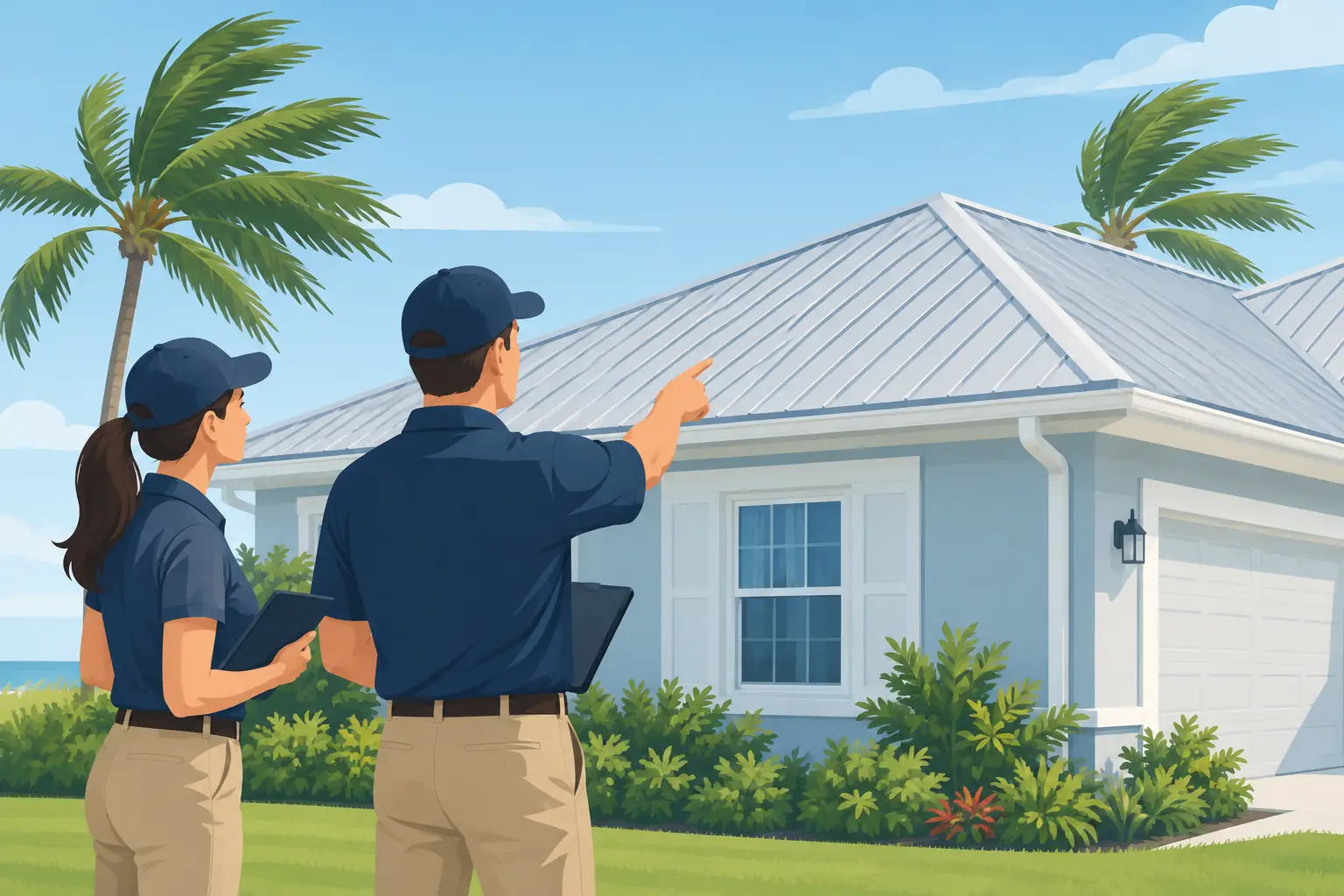
A wind mitigation inspection can turn details that are easy to overlook - roof connections, decking, shutters, impact-rated openings, and roof shape - into documentation your insurance carrier may use when evaluating windstorm coverage. For South Florida homeowners, it is a practical way to understand how a home is prepared for hurricane conditions and where protection may still be missing.
The inspection is not a promise of insurance savings, and it is not a substitute for maintaining a sound roof or securing vulnerable openings. It is, however, a clear snapshot of the wind-resistant features that are present and verifiable at the time of inspection. That clarity matters when storms, insurance renewals, and major exterior improvement decisions are all part of homeownership.
What a Wind Mitigation Inspection Looks For
A qualified inspector reviews specific construction features that can reduce a home's exposure to wind damage. The findings are typically recorded on a Florida wind mitigation form for submission to an insurance carrier. Insurers set their own underwriting standards and discount calculations, so the form provides evidence rather than a guaranteed result.
The roof is often central to the inspection. An inspector may document the age and condition of the roof covering, but the more relevant wind-mitigation questions focus on how the roof assembly is secured. That can include the roof deck attachment, the type and spacing of fasteners used to secure decking, and the connection between the roof structure and the exterior walls.
Roof-to-wall connections are especially significant. Depending on the home, the inspector may identify toe nails, clips, single wraps, double wraps, or other connection methods. Stronger, properly documented connections can help a home better resist uplift forces during high winds. What is visible and accessible will determine what can be verified.
The inspection also considers the home’s overall geometry. A hip roof, which slopes on all sides, can perform differently in high winds than a gable roof. This does not mean one homeowner should replace a functional roof solely to change its shape. It means roof geometry is one of several factors insurers may review when assessing wind exposure.
Why Opening Protection Matters in South Florida
Windows, exterior doors, garage doors, skylights, and other glazed openings can become critical weak points during a hurricane. If wind-driven debris breaks an unprotected opening, pressure can build inside the home. That added pressure can increase stress on the roof and walls while allowing rain to enter quickly.
For that reason, a wind mitigation inspection may document whether openings are protected by approved hurricane shutters, impact-rated windows, impact-rated doors, or another qualifying system. The key word is approved. A homeowner may have shutters or upgraded windows, but the inspector needs adequate documentation, labels, permits, or visible product information to verify that they meet the required standard.
Not every home needs the same solution. Permanently installed impact windows and doors offer daily convenience, security, noise reduction, and continuous protection without the need to install panels before a storm. Approved shutters can be a strong option as well, particularly where budget, architecture, or a phased renovation plan calls for a different approach. The best choice depends on the home, the opening sizes, local code requirements, and how the homeowner wants to prepare for storms.
Garage doors deserve attention too. A large garage door is a major exterior opening, and a door that is not rated for local wind conditions can put the surrounding structure at greater risk. When considering a replacement, homeowners should look beyond appearance and confirm the product, installation method, and permitting approach are appropriate for South Florida’s hurricane environment.
What the Inspection Does Not Tell You
A wind mitigation report is focused and useful, but it has limits. It does not provide a complete assessment of roof condition, predict whether a roof will leak during a storm, or certify that every part of the home meets current building code. It also does not replace a general home inspection, a four-point inspection when one is required, or an evaluation after visible storm damage.
This distinction is important for older homes. A report may show favorable roof-to-wall connections or qualifying opening protection, while the roof covering itself is nearing the end of its service life. On the other hand, a newer roof may be in excellent condition but lack documentation for the decking attachment or other features. Homeowners should treat the report as one piece of a broader exterior protection plan.
Insurance companies can also request additional information, accept only certain forms, or change their eligibility requirements. Before scheduling an inspection or making an upgrade for insurance purposes, it is wise to ask your agent or carrier what documentation they need and how long it remains valid.
How to Prepare for the Inspection
Good preparation helps the inspector verify features accurately and may prevent a follow-up visit. Gather available records for your roof, windows, doors, shutters, and garage door. Permits, product approvals, installation invoices, engineering documents, photographs from a reroof project, and manufacturer labels can all be useful.
Make sure the inspector can safely access areas that may need to be viewed, such as the attic, garage, and exterior openings. Attic access is particularly helpful because roof decking and roof-to-wall connections are often documented from inside the structure. Do not remove insulation, pull at wiring, or attempt to expose structural connections yourself. An inspector should determine what can be safely observed.
If you have impact windows or doors, do not assume the glass alone proves qualification. Product labels and approvals matter, and the installation must be consistent with the approved system. The same is true for shutters. Keeping records organized after an exterior project can make future inspections, insurance discussions, and a home sale easier.
When an Upgrade Is Worth Considering
A wind mitigation inspection can reveal a gap between the protection your home has and the protection you want. Sometimes the next step is straightforward, such as replacing an aging garage door or adding approved opening protection. In other cases, the findings may support a larger project, such as a reroof with improved deck attachment or a coordinated window-and-door replacement.
The right timing depends on the condition of the existing exterior systems. Replacing a roof that is performing well just to pursue a possible discount may not be the most economical decision. But if the roof is approaching replacement age, it makes sense to discuss wind-resistant details before the work begins. Those details are far easier to address during a planned reroof than after the new roof is complete.
The same principle applies to windows and doors. If openings are drafty, difficult to operate, leaking around the frame, or nearing the end of their useful life, upgrading to properly selected hurricane-impact products can address several concerns at once: storm protection, water resistance, security, energy performance, and curb appeal. The insurance impact is one consideration, not the only reason to invest.
Questions to Ask Before You Act
When reviewing your report, ask what features were verified, what could not be verified, and what documentation may change the result. If a feature was not credited because it was hidden or unsupported by records, find out whether permit archives, contractor records, or product approvals could clarify the issue.
For a planned roofing, window, or door project, ask how the proposed system will address local wind requirements and what paperwork you will receive after installation. A professional contractor should explain the scope clearly, coordinate the right products for the home, and help you understand how construction choices affect long-term protection.
South Florida homes face more than one storm season concern. They face heat, moisture, driving rain, salt exposure in coastal areas, and the everyday wear that can turn a small exterior weakness into a costly repair. A wind mitigation inspection gives you a useful starting point. From there, the goal is not simply to check a box for insurance - it is to make informed improvements that help your home stand ready when the forecast changes.
If your inspection points to aging roofing, unprotected openings, or questions about hurricane-rated upgrades, Florida Roof & Impact can help you turn those findings into a clear exterior improvement plan built around protection, performance, and confidence in your home.