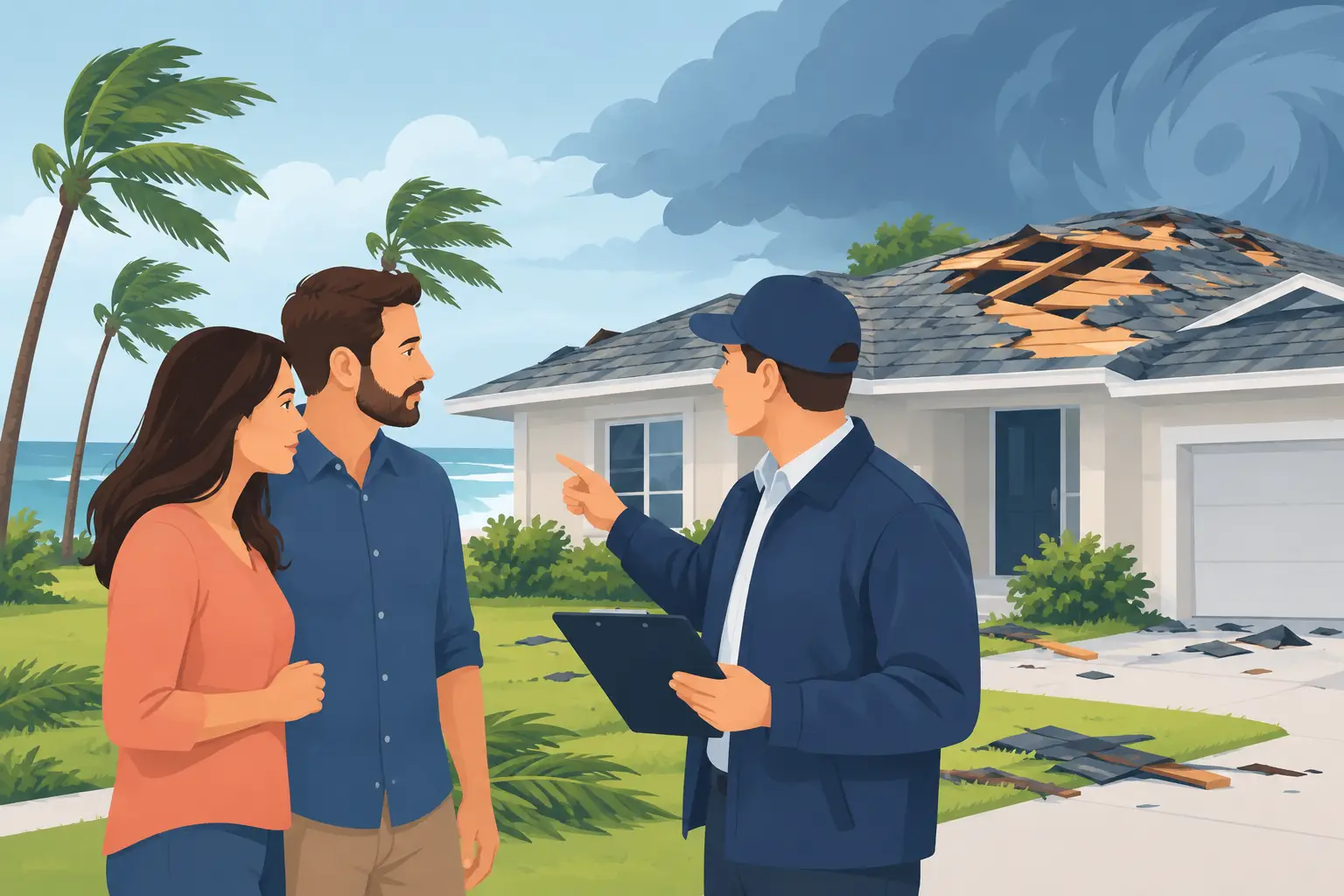
A hurricane can leave obvious damage behind, such as missing shingles or a broken window. More often, the costly problems are less visible: lifted roof materials, damaged flashing, water that has entered an attic, or compromised seals around windows and doors. A storm damage insurance claim begins with protecting your home, documenting what happened, and getting a clear picture of the damage before small failures become larger repairs.
For South Florida homeowners, the first days after a storm can feel rushed. You may be managing water intrusion, checking on family, and trying to understand what your policy covers. A measured process helps you make sound decisions while protecting both your property and your ability to present a well-supported claim.
Start With Safety and Temporary Protection
Do not climb onto a roof, step near downed power lines, or enter areas with standing water near electrical equipment. Wind damage can weaken roof decking, loosen tiles, and create hazards that are not apparent from the ground. If a ceiling is sagging or water is actively entering the home, keep people and belongings away from the affected area.
Your insurance policy generally requires you to take reasonable steps to prevent additional damage after a loss. That can mean placing a tarp over an exposed section of roof, covering a broken window opening, moving furniture away from a leak, or collecting dripping water in containers. Keep every receipt for emergency materials, mitigation work, and temporary repairs.
Temporary protection is not the same as starting a full replacement before the insurer has had the opportunity to inspect. Emergency work may be necessary, but avoid discarding damaged materials or authorizing major permanent repairs without carefully documenting the condition first. The right balance depends on the severity of the opening, active water intrusion, and the instructions provided by your insurer.
Document the Storm Damage Insurance Claim Thoroughly
Photographs and video create a record of conditions that can change quickly after cleanup or emergency repairs. Start outside from a safe ground-level position, then document interior damage room by room. Take wide shots to show context and close-ups to capture details.
A useful claim file should include more than pictures of the most visible damage. Gather:
- Photos and video of roof areas, gutters, soffits, exterior walls, windows, doors, screens, and fences
- Interior images of stains, wet drywall, damaged flooring, attic moisture, and personal property losses
- The date and approximate time you first noticed the damage, along with the storm event involved
- Receipts, invoices, estimates, and records for emergency mitigation or temporary protection
- Prior photos, maintenance records, and receipts for earlier roof, window, or door work when available
Write down what you observe before details become difficult to remember. For example, note that water appeared around a specific window after sustained wind-driven rain, or that a ceiling stain developed after shingles were found in the yard. Stick to the facts. You do not need to diagnose the cause before a qualified professional and the insurance adjuster evaluate the property.
Report the Loss Promptly
Notify your insurance carrier as soon as reasonably possible. Most insurers allow you to begin the process by phone or through an online claim portal. Record the claim number, the date of your report, and the name or identification number of each representative you speak with.
When you report a loss, describe the observed damage clearly and accurately. Explain the storm event, the areas affected, whether the home is currently protected from further damage, and whether emergency mitigation has been performed. Avoid guessing about the final scope or cost. The initial report starts the process; it does not need to contain every detail.
Ask what documentation the carrier needs, whether an inspection has been scheduled, and how to submit photos or invoices. Keep copies of every communication. A simple log with dates, names, phone calls, emails, and next steps can make a stressful process far easier to manage.
Get a Professional Exterior Assessment
Insurance adjusters determine coverage under the policy. A qualified roofing and exterior contractor serves a different, valuable role: identifying storm-related conditions, evaluating repair needs, and explaining what is required to restore the home’s exterior protection.
This distinction matters. A roof may look intact from the driveway while showing lifted shingles, broken tile attachments, displaced flashing, damaged vents, or compromised underlayment during a closer inspection. Windows and doors can also suffer impact damage, frame distortion, broken glazing, failed seals, or water intrusion around the opening. In South Florida, these details affect not only appearance but also resistance to future wind and rain.
A professional assessment should address the full exterior envelope rather than treating each issue in isolation. Roof damage can lead to interior moisture. A damaged opening can allow wind-driven rain into walls and flooring. If repairs or replacement are needed, the work should also account for applicable code requirements, product approvals, and proper installation methods.
Florida Roof & Impact can help homeowners understand the visible and less-visible condition of their roof, windows, and doors, then provide a clear estimate for the work needed to restore protection and confidence in the home.
Prepare for the Adjuster’s Inspection
Be present for the inspection when possible, or arrange for a trusted representative to be there. Have your claim number, documentation, and records of temporary repairs ready. Point out every affected area, including interior stains, attic moisture, damaged screens, displaced roof materials, or issues around windows and doors.
It is reasonable to ask questions during the visit. Confirm which areas were inspected and ask about the expected timeline for the carrier’s decision. Do not feel pressured to agree with an assessment on the spot if you do not understand it. Review the written estimate or coverage determination carefully once it arrives.
The adjuster may identify damage that supports repair, replacement, or further evaluation. The outcome can depend on the policy language, deductible, date of loss, cause of damage, prior condition, and the extent of documented storm impact. A claim is not automatically approved because damage exists, and not every aging condition is storm-related. Clear documentation and a detailed professional assessment help establish the facts.
Review the Settlement Carefully Before Repairs Begin
If the carrier issues an estimate, compare it with the actual scope needed to complete quality repairs. Pay attention to line items for roofing materials, flashing, underlayment, ventilation, permits, debris removal, interior repairs, windows, doors, and required protection measures. A low initial estimate does not always reflect every condition that becomes apparent during a detailed inspection or after materials are opened up.
If additional damage is discovered, document it immediately and follow the insurer’s process for submitting supplemental information. Do not assume an overlooked item will be included automatically. Your contractor can explain the construction scope and provide supporting documentation for work that is necessary, but only the carrier can make coverage decisions.
Also confirm your deductible and understand how depreciation, policy limits, and payment timing may affect your out-of-pocket cost. If your policy provides replacement cost coverage, there may be separate steps for recovering withheld depreciation after completed work. Read the carrier’s correspondence closely and ask for clarification when terms are unclear.
Choose Repairs That Improve Future Protection
After a storm, the fastest repair is not always the best long-term decision. If the roof is near the end of its service life, a targeted patch may solve the immediate issue but leave the home vulnerable during the next severe weather event. Similarly, replacing a damaged standard window with another non-impact-rated unit may restore the opening without delivering the level of protection many South Florida homeowners want.
The right path depends on the condition of the existing exterior, your budget, insurance requirements, and how long you plan to own the home. Quality roofing, hurricane-impact windows, and premium exterior doors can work together to strengthen the building envelope, reduce exposure to wind-driven rain, and improve the home’s appearance.
Before selecting a contractor, verify licensing, insurance, experience with South Florida exterior work, written scope details, material specifications, permit responsibilities, and workmanship protections. A clear proposal should make it easier to understand what is being repaired or replaced and why.
A well-managed claim is not only about recovering from the last storm. It is an opportunity to make thoughtful repairs that leave your home better prepared for the next one.