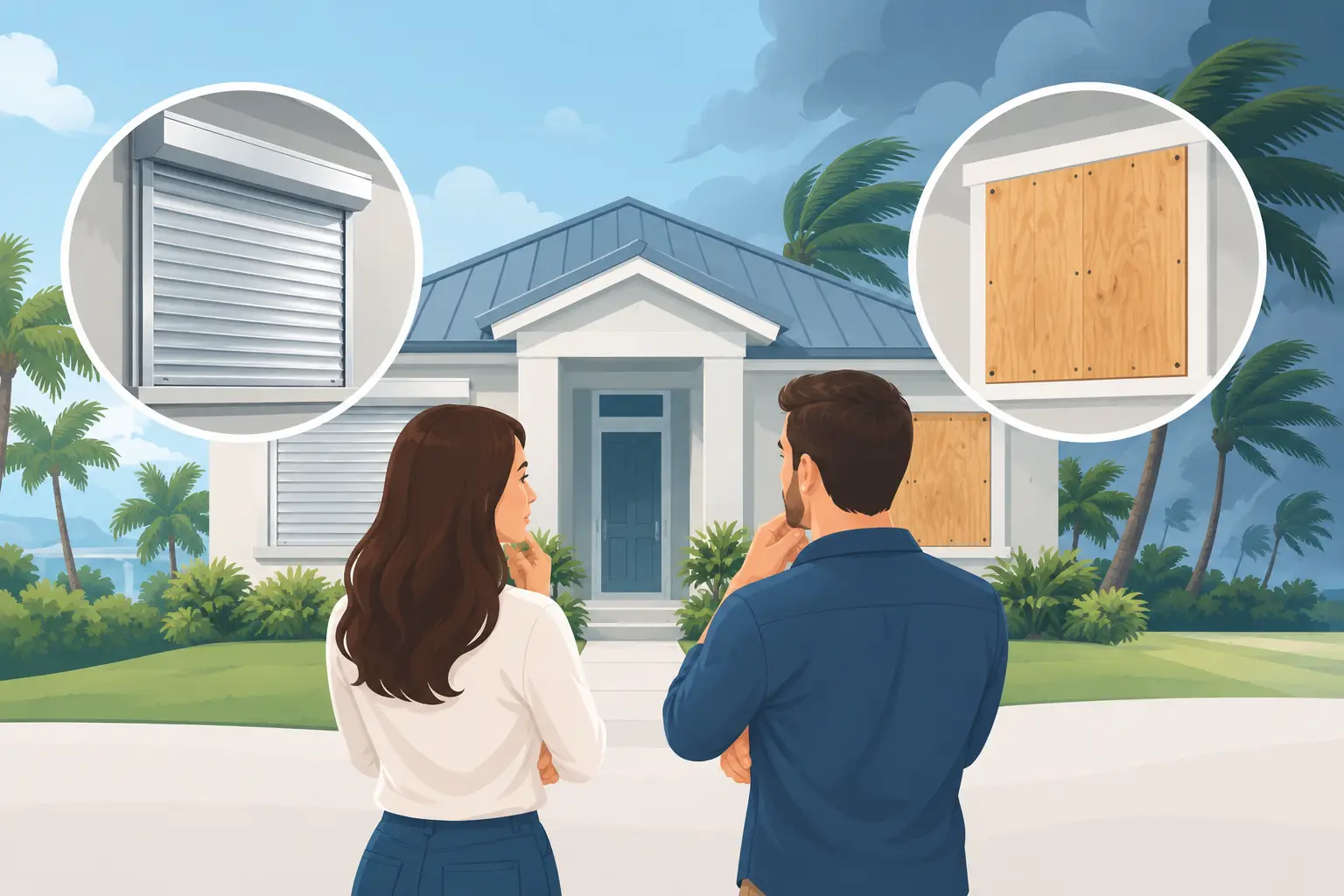
When a named storm is moving toward South Florida, the question of hurricane shutters vs plywood becomes urgent fast. Both can help protect vulnerable windows and doors from wind-driven debris, but they are not equal in convenience, durability, appearance, or long-term value. The right choice depends on your home, your budget, and how prepared you want to be before the next storm watch begins.
For homeowners who have waited in long lines for plywood, struggled to find enough panels, or faced a last-minute installation before tropical-storm-force winds arrive, permanent shutter systems can offer a very different level of readiness. Plywood remains a practical temporary option in certain situations, but it should be selected and installed with care.
Hurricane Shutters vs Plywood: The Core Difference
Hurricane shutters are purpose-built exterior protection systems. Depending on the style, they may roll down, fold closed, slide into tracks, or attach to preinstalled anchors around an opening. Quality systems are designed, tested, and installed to meet specific wind and impact requirements for the home and jurisdiction.
Plywood is a temporary covering installed over windows, doors, and sometimes other vulnerable openings before a storm. It can reduce the chance of broken glass and wind intrusion when the correct material, thickness, fastening method, and installation details are used. It is not simply a matter of placing any available wood over a window. Poorly secured panels can fail, pull away, or create dangerous debris in high winds.
The biggest distinction is preparedness. Shutters are a permanent investment that can be deployed quickly. Plywood demands advance purchasing, storage, measuring, cutting, labeling, hardware, labor, and time when everyone else is preparing for the same storm.
Protection During Hurricane Conditions
A home’s windows and exterior doors are part of its protective envelope. When a window breaks during a hurricane, wind and rain can enter the home with force. That intrusion can damage finishes and belongings, but it can also increase interior pressure and place additional stress on the roof and walls.
Properly designed and professionally installed hurricane shutters provide dependable protection for the openings they cover. Many products are engineered for the demanding wind zones and impact requirements common across South Florida. The system matters as much as the panel itself: tracks, anchors, fasteners, wall conditions, and installation details all need to work together.
Plywood can be effective as a temporary measure, particularly for homeowners who do not yet have permanent protection in place. For better storm performance, homeowners should use exterior-grade plywood rather than thin, low-quality sheets or particleboard products. Panels must extend beyond the opening as needed and be anchored into appropriate structural framing or masonry, not merely attached to window trim.
Still, plywood has practical limitations. It can leave gaps if panels are cut inaccurately, can be difficult to secure over upper-story openings, and may be challenging to install safely in deteriorating weather. Reusing panels over several seasons also exposes them to warping, moisture damage, and misplaced hardware.
Speed and Safety Before a Storm
Time is one of the strongest arguments for permanent shutters. When a storm track shifts or a warning is issued, homeowners may have only a limited window to protect the property. Accordion shutters can typically be closed quickly. Roll-down shutters can be deployed with a manual crank or motorized system, depending on the product. Panel and Bahama-style shutters require more hands-on work, but their mounting points are already in place.
Plywood creates a much longer preparation process. Even homeowners who store pre-cut panels must retrieve them, confirm labels, gather fasteners, and install each sheet. If panels need to be purchased and cut after a storm is announced, supply shortages and crowds can make a stressful situation even harder.
There is also a personal safety issue. Carrying heavy plywood sheets, climbing ladders, and using power tools under time pressure can be risky. This is especially relevant for older homeowners, second-story homes, and properties with large or difficult-to-access openings.
Cost: Upfront Expense vs Long-Term Value
Plywood is generally less expensive at the outset. For a homeowner facing an approaching storm or planning a short-term solution, it can be the more accessible choice. The total cost, however, includes more than the sheets themselves. Consider exterior-grade material, fasteners, anchors, cutting tools, storage space, replacement panels, and the labor required to put everything up and take it down.
Hurricane shutters require a larger initial investment because they are a custom exterior upgrade. Costs vary by shutter style, opening size, number of windows and doors, wall construction, access, finish, and local code requirements. Premium systems also involve professional measuring, approved components, careful installation, and inspection requirements where applicable.
That investment can make sense for homeowners planning to remain in the property, those with frequent travel schedules, or anyone who wants a more consistent hurricane-preparedness plan. Shutters can also improve the home’s exterior appearance compared with boarded windows and may be viewed as a valuable feature by future buyers.
Appearance, Light, and Everyday Living
Plywood is strictly functional. Once installed, it blocks natural light and substantially limits visibility. A boarded-up home can feel closed in during a storm, and the panels must be removed after the threat passes, assuming conditions are safe.
Hurricane shutters can be chosen to complement the home’s architecture. Bahama shutters add a distinctive coastal look and provide shade when open. Colonial shutters suit more traditional facades. Accordion shutters are stored at the sides of openings when not in use, while roll-down shutters offer a clean, low-profile solution when integrated thoughtfully.
No shutter style is perfect for every home. Accordion shutters are highly practical but remain visible along the sides of windows. Roll-down systems offer convenience and a refined look, but they are often among the higher-cost options. A qualified exterior contractor can help homeowners balance protection, access, curb appeal, and budget instead of selecting a system based only on a product photo.
Insurance, Code, and Documentation Considerations
Insurance discounts and policy requirements vary by carrier, property location, product rating, and the protection provided across all required openings. Homeowners should never assume that installing any shutter or boarding a few windows will automatically lower premiums. Ask the insurer what documentation is needed and whether the opening protection must meet specific approval or impact standards.
In South Florida, code-conscious installation is essential. Shutters may need product approvals, permits, and inspections depending on the project and local jurisdiction. The installation must match the approved system and the existing wall conditions. A strong panel installed with the wrong fasteners or spacing is not the same as a properly installed protective system.
Plywood generally does not offer the same documentation or long-term verification as a professionally installed shutter system. It may serve as emergency protection, but it is not a substitute for understanding your home’s windstorm requirements.
When Plywood May Be the Right Choice
Plywood can be reasonable when a homeowner needs immediate temporary protection, is preparing for a single upcoming storm while planning permanent upgrades, or has a limited number of small openings to cover. It can also be useful as a backup plan for a property without installed shutters.
The key is to treat it as a real protective measure, not an improvised last-minute task. Measure every opening before hurricane season, prepare labeled panels in advance, store them flat and dry, and keep the correct fasteners with each set. Do not wait until a hurricane is approaching to test whether the plan works.
When Hurricane Shutters Are the Better Investment
Permanent shutters are often the better choice for homeowners who want repeatable, lower-stress protection year after year. They are especially valuable for larger homes, multistory properties, frequent travelers, homeowners who cannot safely handle plywood, and families seeking a more complete exterior protection strategy.
They also make sense when combined with other improvements, such as impact-rated windows and doors or a roofing project. Looking at the exterior as one connected protective system helps identify where wind-driven rain and debris are most likely to create damage.
Florida Roof & Impact helps South Florida homeowners evaluate these decisions in the context of the entire home, not just one storm season. The goal is a clear plan that respects your property’s needs, local conditions, and long-term priorities.
The best time to decide between shutters and plywood is before the forecast cone appears. Walk your property, identify every vulnerable opening, and choose a level of protection you can deploy confidently when time matters most.